Kata did not begin as a business plan. It began with one person's day, and with the person who watched her put it together by hand. Kata was co-founded by Mégane Fritschi and Roman Fritschi. This is how it started.
It started with Mégane's day
Mégane comes from sales and marketing, with Christian Dior among the brands she worked for, and she moved from London to Zurich. Sport, food and feeling well have always run through her days, and she likes to find out what actually works for her.
Her health ran on whatever was to hand. ChatGPT for the thinking, an app for each area, a handful of subscriptions that each held one sliver of the story, and the rest in a notes file. Every day she rebuilt the same picture from scratch.
Between a chat and a tracker
General AI is brilliant for thinking things through, and tracking apps are thorough. Neither is a health memory. A chat remembers conversations, not your numbers, and it can mix up your life and your data. A tracker keeps the numbers, and asks you to type every form yourself.
What Mégane was assembling by hand sat in between: one place that knows the numbers, keeps the decisions and answers from both.
Built for one person first
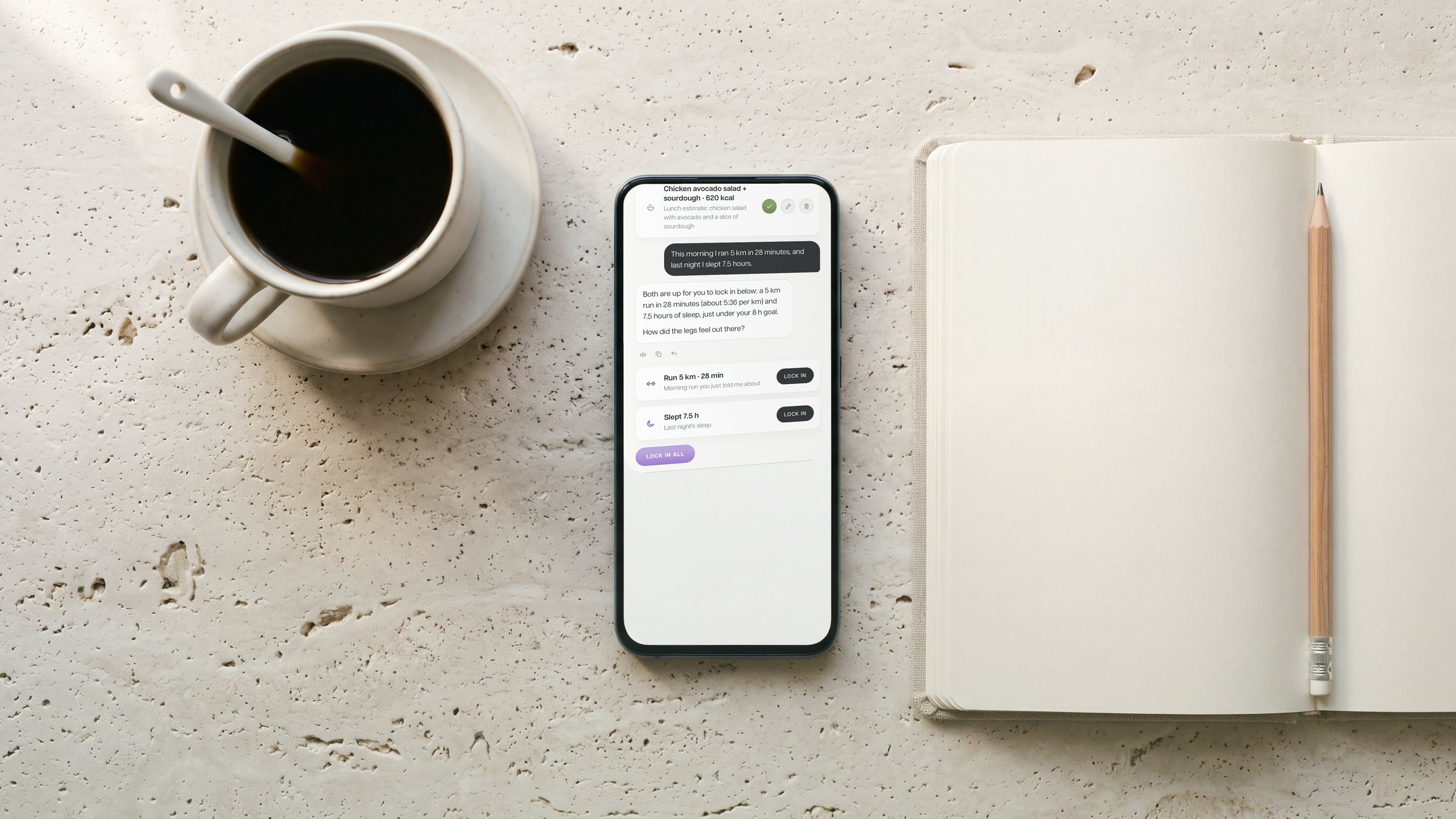
Her husband, Roman, watched her do it and started building that one place, for her alone at first: one conversation for the whole day, with a complete system underneath for activity, nutrition, water, sleep, supplements and mind, so the picture never has to be rebuilt again.
Four rules were fixed before the first line of code: it stays private, the numbers are real, Kata does not invent, and it does not forget you.
Then people asked
Friends saw Mégane use it and asked for it, and so did family. The two of them built the first app around what she used every day, handed it to the people closest to them, and tested, changed and tested again. What they saw was simple: it helped, and it kept helping. That is when they decided to open Kata to everyone.
"We built this for anyone, whatever shape their life is in and wherever they are starting from. A routine you can actually keep, and one that gets better the longer you keep it." · Mégane Fritschi, co-founder
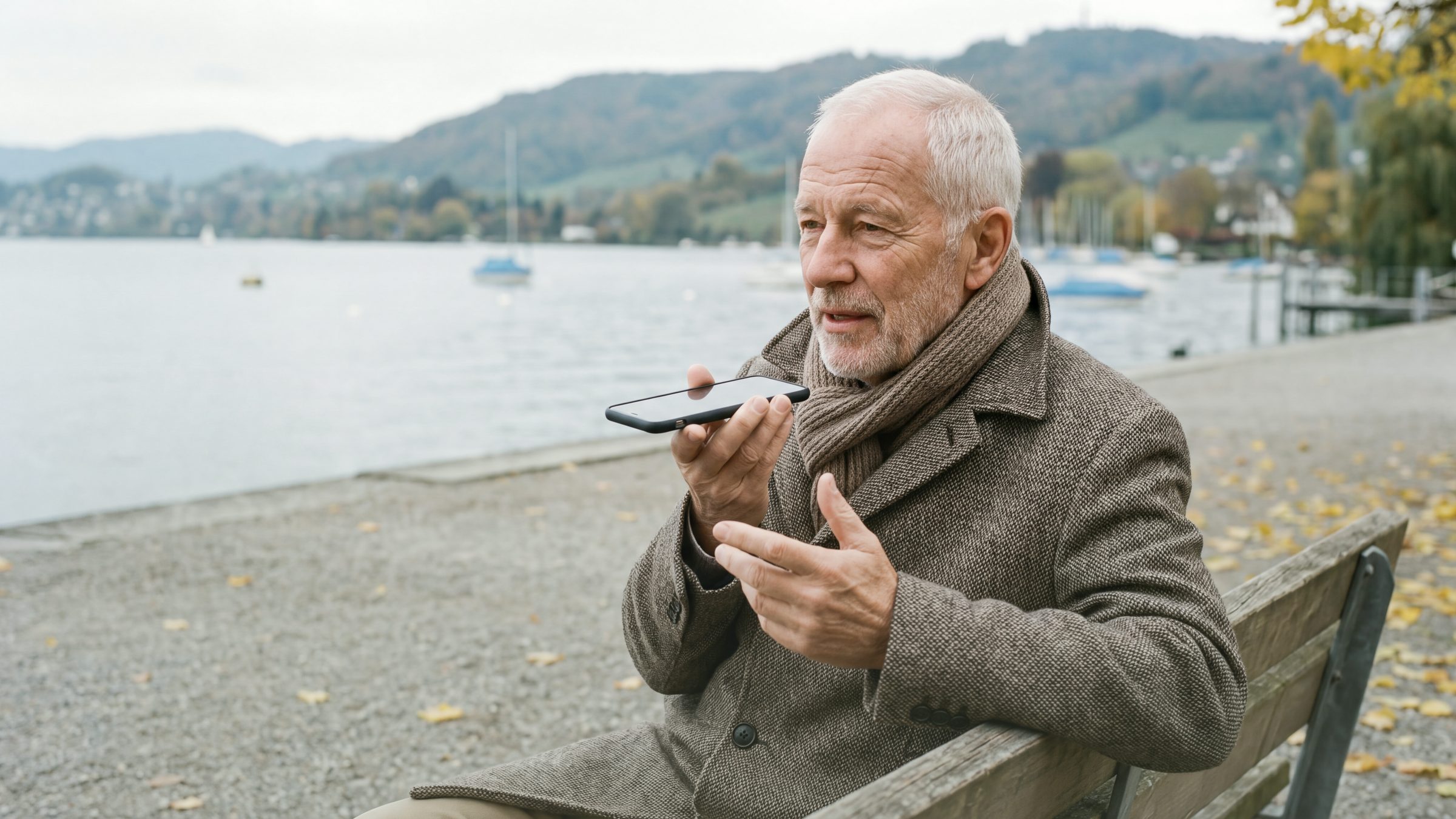
Kata also speaks in an AI voice made from Mégane's, with her consent: in Talk, in a rare voice note and when your week is read aloud, on Kata Plus and Kata Unlimited. Kata writes every word, and none of it is a recording of her.
The technology behind it
Roman is a tech entrepreneur with a bachelor in computer science and an agency background. While still studying, he built one of the first AI chatbots for a leading Swiss ecommerce business. The years since went into fintech, legaltech, web3 and AI: always the technology, the business and the marketing as one job. At Kata he leads technology and product, and he is managing director of BSNS GmbH, the Swiss company that builds and operates Kata.
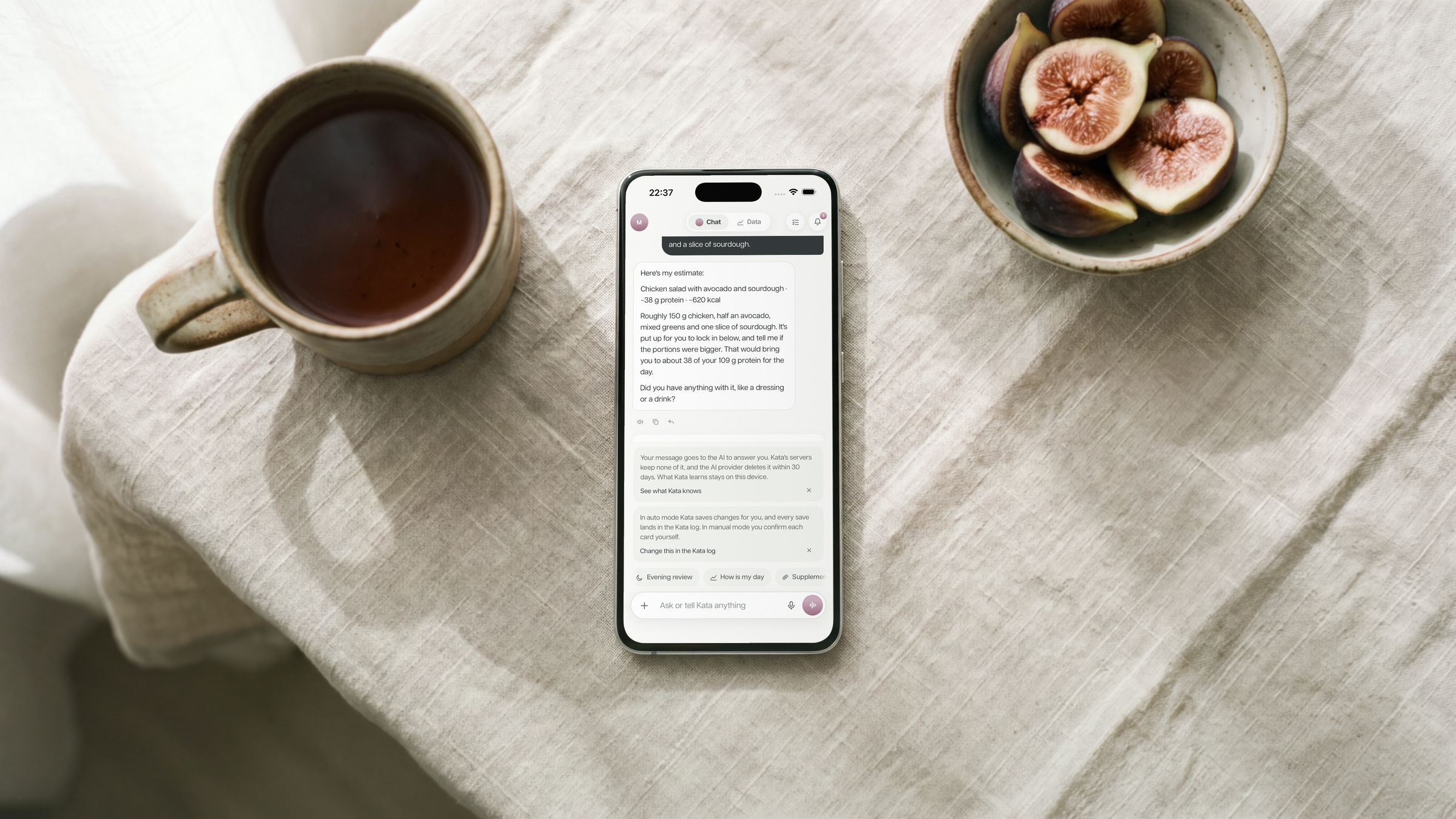
That depth is the quiet advantage. Making an AI you can simply talk to is one problem. Making one that keeps your health data, your chats and its memory of you on your device, and still answers with your own numbers in mind, is a much harder one. When you ask Kata something, only your message and the context it needs travel, encrypted, to the AI to write the reply, and Kata keeps no copy.
"Your data is yours and it stays on your device. One place for training, food, sleep, supplements and whatever your watch already knows, and it learns you rather than the average person. No two Katas end up the same." · Roman Fritschi, co-founder
The vision
They started Kata out of one conviction: health data belongs to the person it describes, on their own phone, not in someone else's cloud. Kata is built and operated in Switzerland, by BSNS GmbH in Rotkreuz, where privacy is less a feature than a habit, for people who take their health seriously without wanting to run their life from a spreadsheet.
The name carries the rest. In Japanese budo, a kata (型) is a form practiced until it stops being effort and starts being you. Health does not respond to motivation. It responds to repetition. Kata exists to make that repetition light enough to keep, and personal enough to feel like yours.