There are a lot of health apps. Most people have tried several and abandoned all of them. So the honest question is not "why another one," it is "why this one." The answer comes down to three words we hold ourselves to: easy, accessible, personal. Here is the case, in plain terms.
Easy
Almost every health app fails at the same point, and it is not the science. It is the friction. Logging a meal means searching a database, picking a portion, confirming a serving. Logging a workout means tapping through sets. Every day, the app asks you to do administrative work, and every day is one more chance to quietly stop.
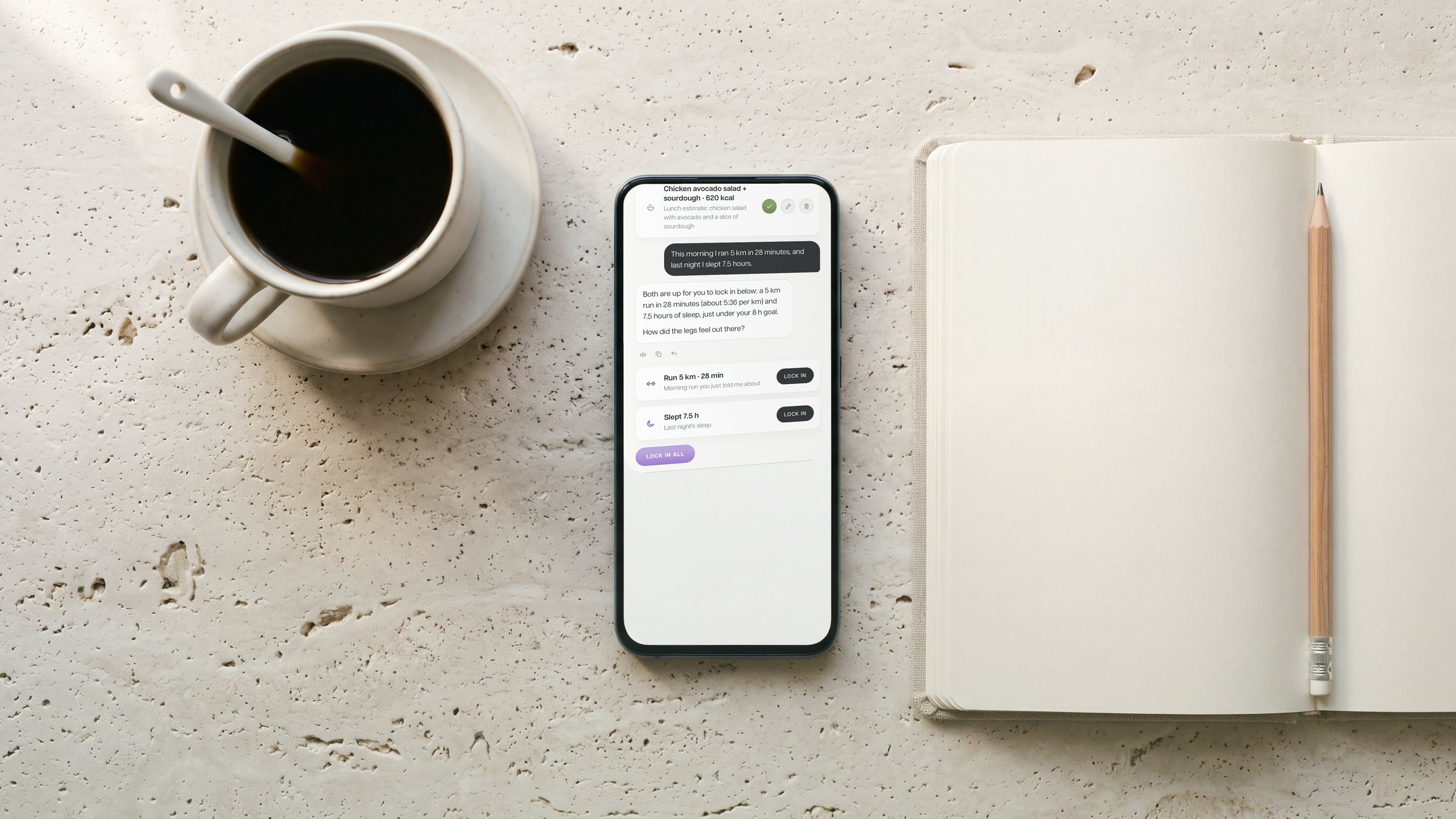
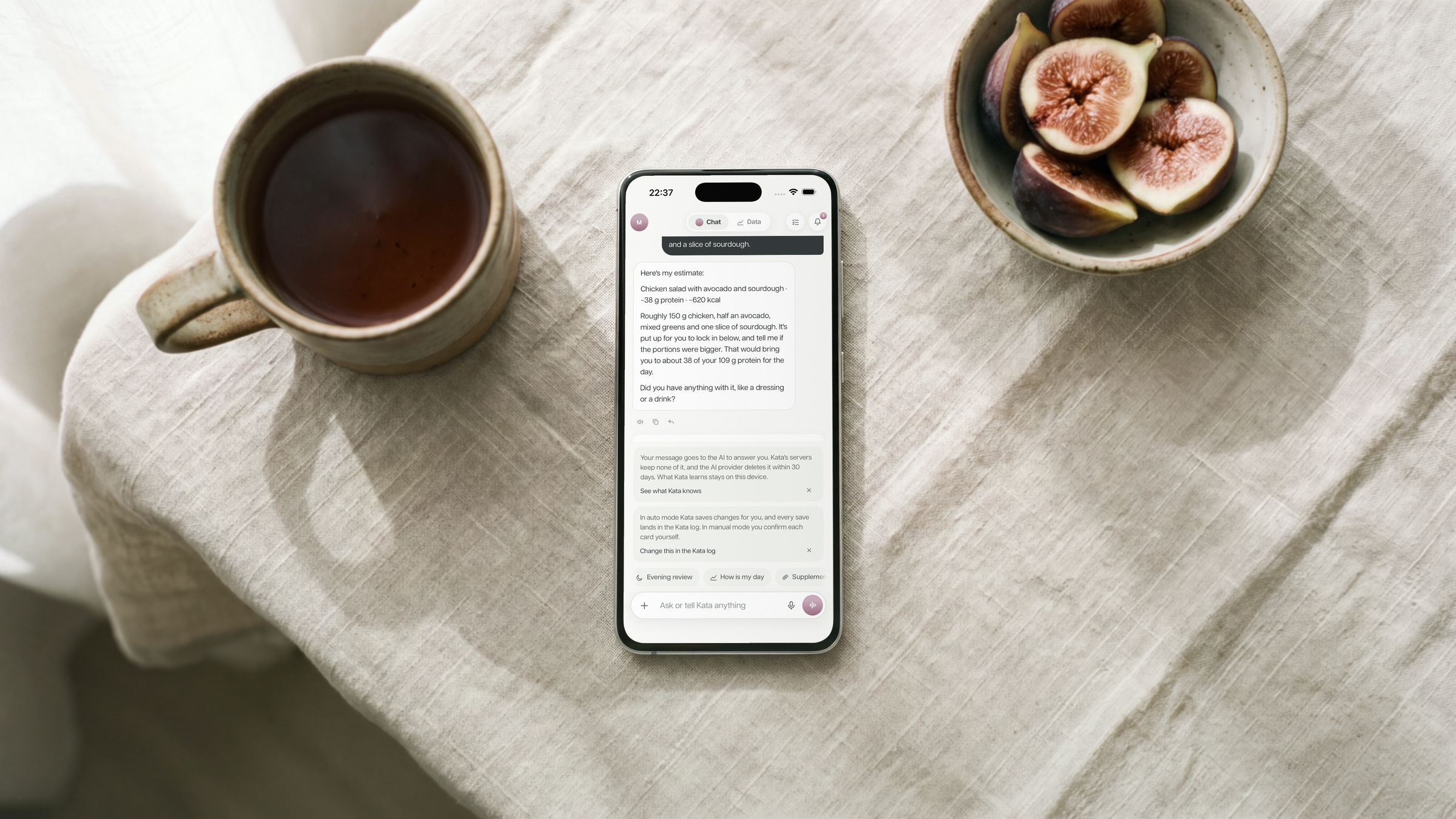
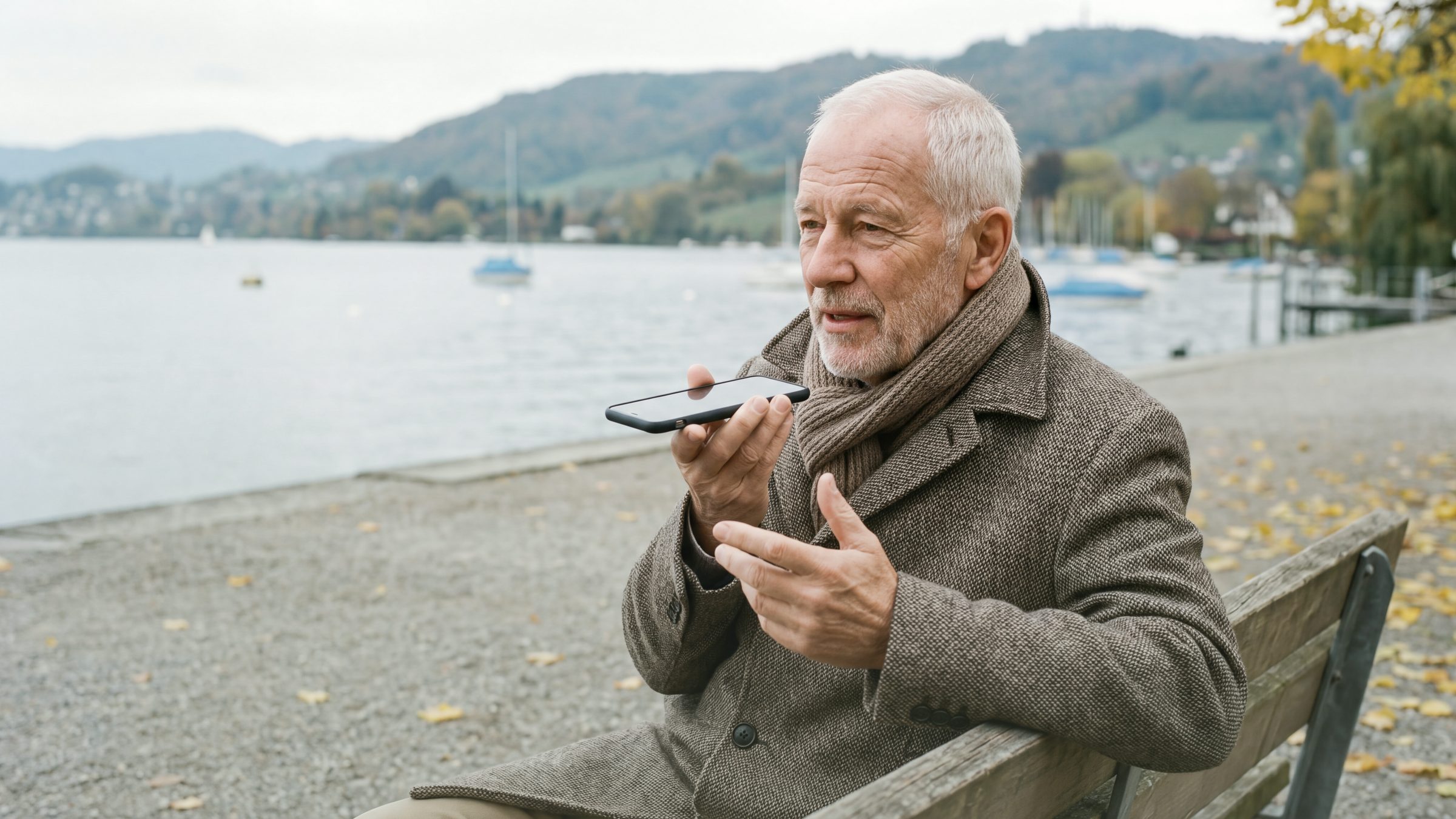
Kata removes the administration. You talk. "Weighed 82.4 this morning, had eggs and toast, training at six." That is the whole interaction. Kata turns it into a weigh-in, a meal, a planned session, and shows you the cards so you can confirm or correct them. No forms, no menus, no database searches.
Easy is not a nice-to-have here. It is the mechanism. Health does not respond to motivation, it responds to repetition, and repetition only survives when each rep is light. Make the daily action feel like sending a text, and people keep doing it. That is the difference between an app you use for a week and one you use for a year.
Accessible
Accessible means Kata meets you where you already are, with as few barriers as possible.
On a computer there is nothing to install: Kata runs right in your browser, and as an app on iPhone, with its own Apple Watch app, and on Android. Everything you track is free for good, all of Kata is free for everyone until 15 November 2026, and from 16 November every account starts with 30 days of Kata Plus. Cost is not a reason to wait. It speaks six languages, English, German, French, Italian, Spanish and Swedish, each written to actually sound natural rather than machine-translated. And it does not demand that you become a data analyst: if you can describe your day out loud, you can use Kata fully.
Accessible also means honest about what it is. Kata is a companion for everyday health, not a clinic and not a doctor. It keeps that boundary clear, points you to a professional when that is the right step, and stays in its lane. That honesty is part of being genuinely usable by ordinary people, not just enthusiasts.
Personal
Generic advice is easy to find and easy to ignore. The internet is full of it. What almost nobody has is advice that knows their numbers, their patterns and their week.
Kata is built around one person: you, your data, today. It remembers, so you do not have to repeat yourself, and it gets more useful the longer you use it. It reads your recovery, your sleep and your training load, then turns them into a few clear recommendations for today, not a generic checklist. Over weeks, it stops feeling like a tool and starts feeling like something that knows you.
We put it in one line: everyone gets the same reliable Kata, and no two people get the same one. We mean that as a design constraint, not a slogan. The whole architecture, the memory that compounds, the local-first privacy that makes it safe to be fully honest, exists so the coaching can be truly personal. You can only get advice this specific from something you can tell everything, and you only tell everything to something that keeps it between the two of you.
Why it adds up
Easy keeps you coming back. Accessible lets you start at all. Personal makes it worth continuing. Take any one away and the others weaken: personal but hard, and you quit; easy but generic, and it does not help; accessible but forgetful, and it is just another chat window.
Kata is the attempt to hold all three at once, calmly, and for the long run. Not a tracker to feed and not a motivational push, but a practiced form for your day: light enough to keep, personal enough to matter, open enough for anyone to begin.
That is why Kata. Start with it, and let it learn you.