Protein has become the nutrient everyone talks about. Shakes, bars, yoghurts with the number printed large on the lid. Some of that attention is deserved, some of it is marketing. Here is what the official reference values and the better studies actually say, and how to turn that into meals rather than products.
The baseline
The European Food Safety Authority sets the population reference intake for adults at 0.83 grams of protein per kilogram of body weight per day, the same for older adults. For someone who weighs 70 kilos, that is about 58 grams a day. The figure is meant to cover the needs of nearly everyone in a healthy population, and EFSA notes that most adults in Europe already eat at or above it.
That last point matters. If you are healthy, not training much and eating a varied diet, you are very likely getting enough already. The baseline is a floor for health, though, not a target for everything you might want from your body.
When more makes sense
Two groups come up again and again in the research.
People who get older. Muscle becomes harder to keep with age. An expert group led by the European Union Geriatric Medicine Society, the PROT-AGE study group, recommends at least 1.0 to 1.2 grams per kilo a day for people over 65, and 1.2 or more for those who are active. They also say clearly that people with severe kidney disease are an exception, and that the evidence on timing is not settled.
People who train. The International Society of Sports Nutrition, in its position stand on protein, considers 1.4 to 2.0 grams per kilo a day sufficient for most people who exercise.
How much does extra protein add on top of training? An honest answer comes from a 2018 meta-analysis that pooled 49 controlled trials with 1,863 people doing resistance training for at least six weeks. Adding protein made a real but modest difference: on average about 2.5 kilos more on a one-repetition maximum and about 0.3 kilos more lean mass. The benefit flattened out at around 1.6 grams per kilo a day, although that estimate was uncertain, and the authors suggest that people who want every last gain might aim a little higher. The training did most of the work. Protein helped it along.
Does it matter how you spread it?
You will often read that the body can only use 20 or 30 grams at a time. The evidence is less tidy. A narrative review suggests about 0.4 grams per kilo per meal across at least four meals for people who want to build muscle, but that is an informed estimate rather than a trial result. A systematic review of 15 studies found that spreading protein evenly was linked to more muscle in some studies and not in others. And a 2023 trial in young men found that a 100 gram dose after exercise produced a larger and longer muscle-building response than 25 grams, which challenges the idea of a fixed ceiling per meal.
The practical reading is simple. You do not need to time protein to the minute. Having a decent source at most meals, including breakfast, which is often the lightest one, is an easy habit that covers both the daily total and a reasonable spread.
Food first
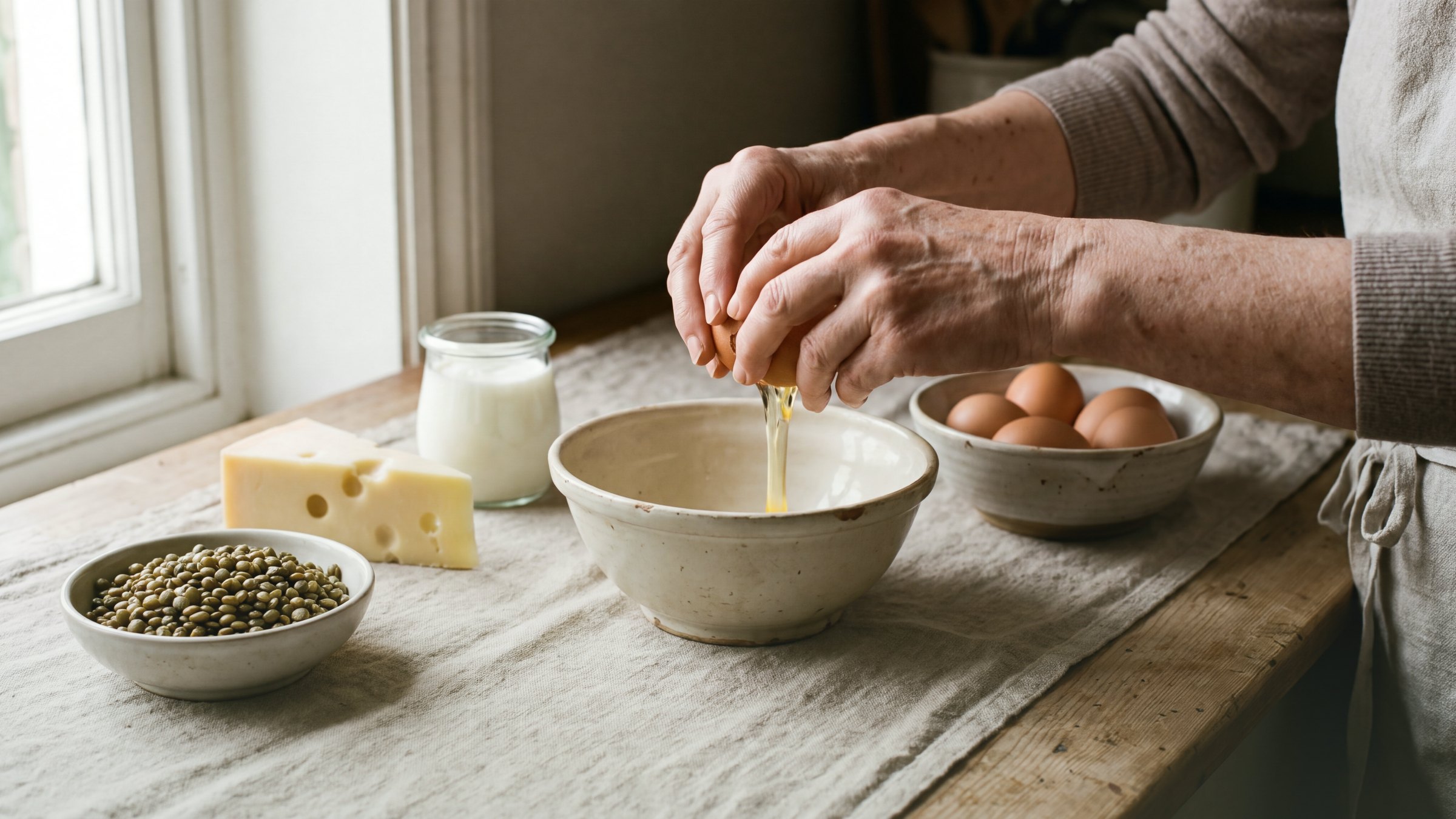
Most people reach a good intake with ordinary food: eggs, yoghurt, quark and cheese, beans, lentils, tofu, fish, poultry and meat, and smaller amounts from grains, nuts and seeds. Plant and animal sources both count. A shake can be convenient on a busy day, but it is a tool, not a requirement.
If you live with kidney disease, are pregnant, or have been told to watch your protein for any medical reason, talk to your doctor before you change anything. The numbers above are for healthy adults.
How Kata handles protein
Kata suggests a daily protein target from your body weight and the phase you are in. Maintain starts at 1.6 grams per kilo, Lose Fat and Build Muscle at 2.0, Longevity at 1.5, and Kata nudges the figure slightly up or down for how active you are, never below 1.2. Those numbers sit at the active end of the research, because most people who set up a phase in Kata are training for something. If you are not, or if a lower number simply fits your life better, set your own: the target is yours to change at any time.
From there it is the same as everything else in Kata. You tell Kata what you ate, in a sentence or with a photo of your plate on Kata Plus, and it estimates the protein and adds it to your day. Your protein for the day sits on Today, so you can see at lunchtime whether dinner needs to carry a little more.
The goal is not to chase a bigger number. It is to know roughly where you are, most days, without weighing your food or reading labels. That is usually enough to make the right choice at the next meal.