There is a small moment that decides whether a health app survives in your life. It is the moment you have something to log and your hands are busy: mid-cook, mid-walk, halfway out the door. If logging means stopping, unlocking, tapping through screens, you skip it. Skip it enough times and the app is gone. Voice is how Kata closes that gap. You just say it.
Talk, and it is done
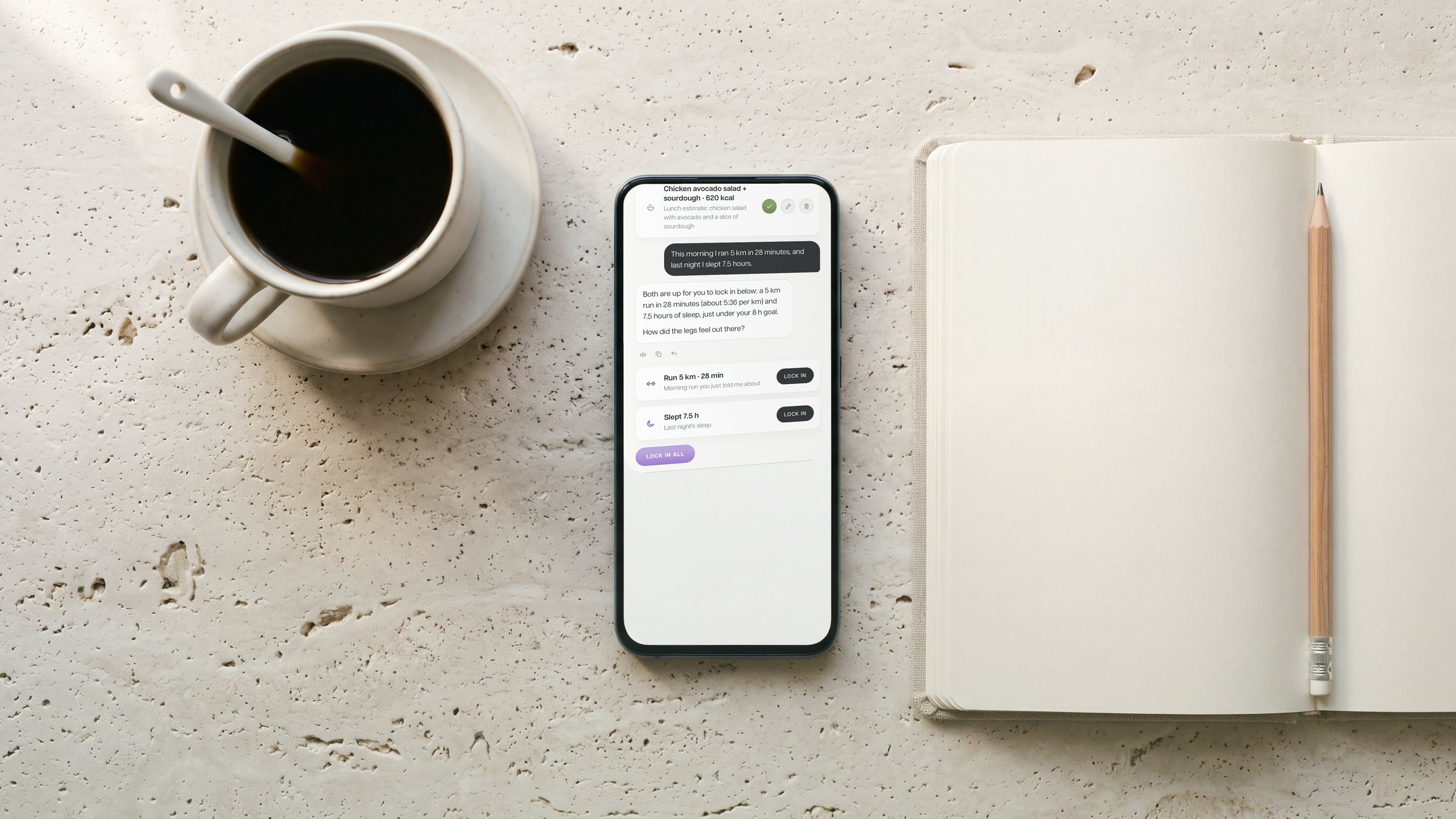
With voice, the interaction is exactly what it sounds like. You speak to Kata the way you would tell a friend about your day. "I weighed 82.4 this morning, had eggs and toast, and I am training at six." Kata listens, understands, and turns that one sentence into the pieces it contains: a weigh-in, a meal, a planned session.
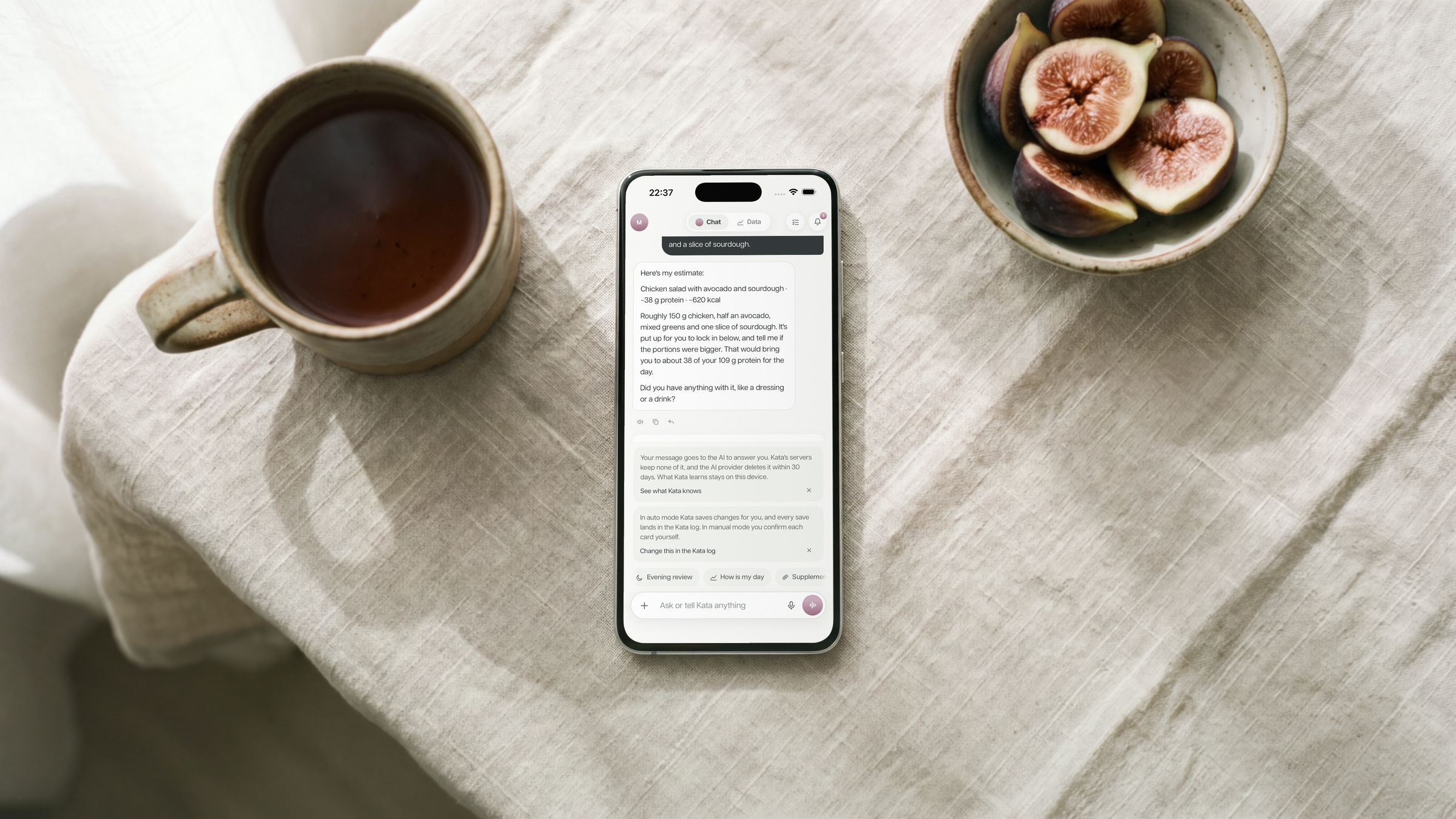
Then it shows you what it heard as lock-in cards. If you are in Manual mode, you confirm each one before it saves. If you are in Auto mode, it saves as you talk and every save still lands in your log, clearly, and every one is undoable. Manual or auto, you choose. The coach never writes to your data without you knowing, whether you typed it or spoke it.
Kata can also answer out loud. With Kata Plus and Kata Unlimited any reply can be read aloud in a Kata voice, and in Talk, the live spoken conversation, the whole exchange can happen without looking at the screen at all. It becomes a conversation, not a form you dictate into.
Why voice changes the experience
Voice is not a novelty on top of the app. It changes the fundamental economics of a daily habit.
- It removes the last of the friction. Talking is the lowest-effort way humans record anything. No keyboard, no menus, no searching a food database. Behaviour-change research is blunt on this point: the easier the action, the more reliably it repeats. Voice makes the daily rep almost weightless, and weightless reps are the ones that survive a year.
- It fits the moments logging actually happens. The times you most want to note something, cooking, driving, walking, warming down after a set, are exactly the times your hands and eyes are occupied. Voice is the only input that works then. It meets the behaviour where it lives instead of asking you to stop and come back later, which usually means never.
- It feels like talking, because it is. Typing your health into fields feels like paperwork. Saying it out loud feels like telling someone about your day. That shift, from data entry to conversation, is a large part of why people keep going. It also fits how Kata is designed: the chat is the app, and voice is simply the most natural way into that chat.
- It is faster than it looks. One spoken sentence can carry several logs at once, sorted correctly. What would be four separate form flows becomes a single breath.
How it works, briefly
You start talking by tapping the mic, or by starting Talk for a whole spoken exchange. Your phone or your browser turns your voice into text, so Kata receives words, never a recording. Then Kata interprets, which matters more: it does not just capture words, it works out what they mean and which parts of your day they belong to, then proposes the matching lock-in cards. You confirm or correct, in Manual mode, or let them save and adjust anything afterward, in Auto mode. Everything lands in the same single timeline as the rest of your day, so a spoken weigh-in sits right beside a photo-logged meal and a WHOOP recovery reading.
Because Kata is local-first, this stays private the way the rest of the app does. Your health story lives on your device, not on our servers, and voice does not change that stance: your words travel like a typed message, encrypted, to the AI to write the reply, and Kata keeps no copy. Being able to speak freely to your coach only works if what you say stays between the two of you.
The quiet point
Voice is not there to be impressive in a demo. It is there because the hardest part of daily health is not knowing what to do, it is doing it consistently when life is busy, and consistency dies at the point of friction. Removing the need to stop, look and tap removes that failure point. You keep living your day, and a sentence here and there keeps Kata current, which keeps its coaching personal.
Just talk. The system does the rest. With voice, that stops being a tagline and becomes the literal way you use it.